STEP ONE – THE INSPECTION
“Where are the little monsters hiding?”
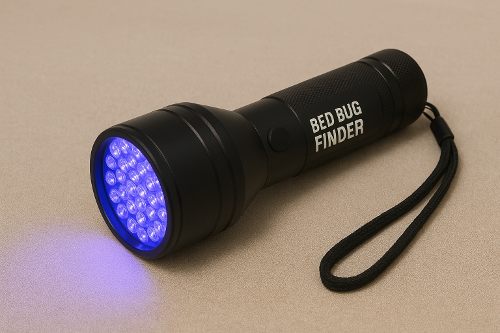
Grab a flashlight and a credit card. Slide the card along mattress seams, baseboards, and into every tiny crack.
Look for clues—rust-colored spots, shed skins, and rice-sized eggs.
Search everywhere: beds, couches, curtains, pet beds—even inside game consoles. Watch for pepper-like dots, husks, or those telltale “rice” eggs.
Mark each hotspot with sticky notes or painter’s tape.
Already know their hideout? You can skip to Step 2. ATTACK & ELIMINATE
Understanding the Enemy’s Hiding Spots
Inspect all rooms. Bed bugs squeeze into cracks, mattresses, outlets, and lie dormant for 12 + months. Miss one, and you’re hosting a family reunion in no time.
Preparing for Your Inspection
Gather the right tools before beginning:
- A bright flashlight or lamp for dark areas
- Gloves for hygiene and safety
- A magnifying glass to spot eggs or shed skins
- A flat object like a plastic card or crevice probe to access tight spaces
It’s also helpful to remove clutter, wash and seal bedding and clothing in plastic bags—especially items near sleeping areas—to limit hiding spots and prevent accidental spread.
Critical Inspection Zones:
-
Mattress seams & box springs
-
Cracks in walls & behind baseboards
-
Inside outlets (!)
-
Couch, cushions, clothing piles, laundry baskets
-
Electronics, backpacks, and pet beds
Why it matters: overlook a single hiding place, and you’ll meet a fresh batch of babies next week—no thanks!
Inspections are tedious; But stay the course—you’re holding the secret formula to start eliminating the problem, fast.
Where to Look First
Begin in the bedroom, focusing on locations commonly inhabited by bed bugs:
- Mattress seams, piping, handles, folds, and the gap between mattress and box spring
- Box spring edges, upholstery, and the underside of fabrics
- Bed frame joints, underside, hardware, and areas where fabric meets wood or metal
Next, inspect surrounding furniture:
- Sofas, chairs, and recliners—especially between cushions and seams
- Nightstands, dressers, and headboards, including drawers, gaps, and behind hangings or picture frames
Also check perimeter zones such as:
- Baseboards, wall cracks, corners, and the edges of carpeting
- Electrical outlets and switches, behind wallpaper, and other less obvious hiding spots
What to Watch For
During the inspection, look for:
- Live insects ranging from pinhead-size (nymphs) to larger reddish-brown adults
- Small black or dark brown spots (fecal matter)
- Shed skins (exoskeletons) and eggs (tiny white or clear, often in seams or crevices)
- Blood smears or reddish stains on linens or nearby surfaces
- In advanced cases, a musty, sweet odor may also be noticeable (If doubts persist despite no visual signs, deploying passive monitors or interceptors beneath bed legs or furniture can help trap specimens over time for confirmation.

What Happens After Inspection
If you find evidence—live bugs, droppings, eggs, or shells—a professional consultation is recommended. Pest control experts can quantify infestation levels, show visual proof, and tailor a treatment strategy, such as heat treatment or insecticides.
If you don’t find any signs but remain suspicious, continue monitoring and maintain cleanliness, as early detection is key to prevention.
Summary Table
| Task | What to Do |
|---|---|
| Prepare tools & space | Flashlight, gloves, magnifier, declutter, wash/seal items |
| Inspect sleeping areas | Mattresses, box springs, bed frames |
| Check furniture & areas | Upholstery seams, drawers, behind pictures, baseboards |
| Identify signs | Bugs, droppings, shed skins, eggs, stains, unusual odors |
| Use monitors if needed | Traps or interceptors under furniture |
| Next steps | Call a professional if signs appear; otherwise, stay watchful |
Behavior
Bed bugs are mostly nocturnal., attractive by CO₂, body heat, and human scent that lures them out—like a buffet bell ringing.
You can make CO2 monitoring traps and use their love of warmth and CO₂ against them. Just google bed bug traps, to see how they are made. However they only killed a hand-full in the beginning, then stop working or me.
Now that you know ware the Bed bugs are hiding and ware to
treat – move on to Step 2. ATTACK & ELIMINATE